
How to Choose the Right Plot Size at Neralu Farms
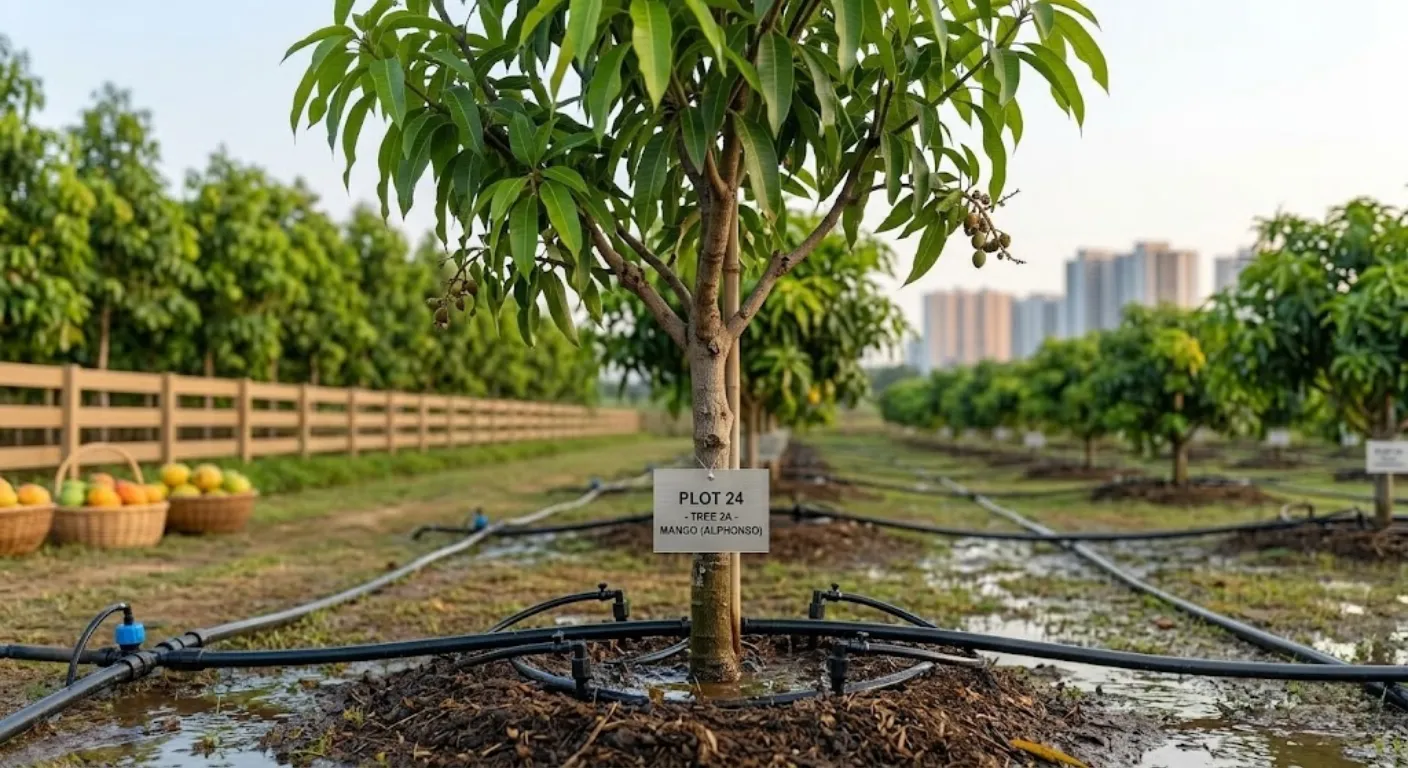
Choosing the right plot size is one of the most important decisions when investing in managed farmland. It directly impacts your financial returns and defines your long-term lifestyle benefits. Whether your goal is land appreciation, passive income, or a peaceful retreat, selecting the right plot size is essential.
Instead of focusing only on size, it is important to align your investment with your budget, purpose, and long-term vision. This guide will help you understand how to choose the ideal farmland plot size based on your goals.
1. Understand Your Primary Investment Goal
Before selecting a plot size, clearly define your purpose. Your objective determines the right investment strategy.
- Long-Term Land Appreciation: Smaller plots are ideal for investors looking for capital growth. They require lower investment and benefit from increasing demand, especially in developing regions near Bangalore.
- Passive Agricultural Income: Medium-sized plots are suitable for plantation farming and agroforestry. They allow better crop planning and generate consistent returns through managed farming.
- Lifestyle & Weekend Retreat: Larger plots are best for building farmhouses, private retreats, or wellness spaces. They offer more space, privacy, and flexibility for lifestyle use.
2. Plot Size Options
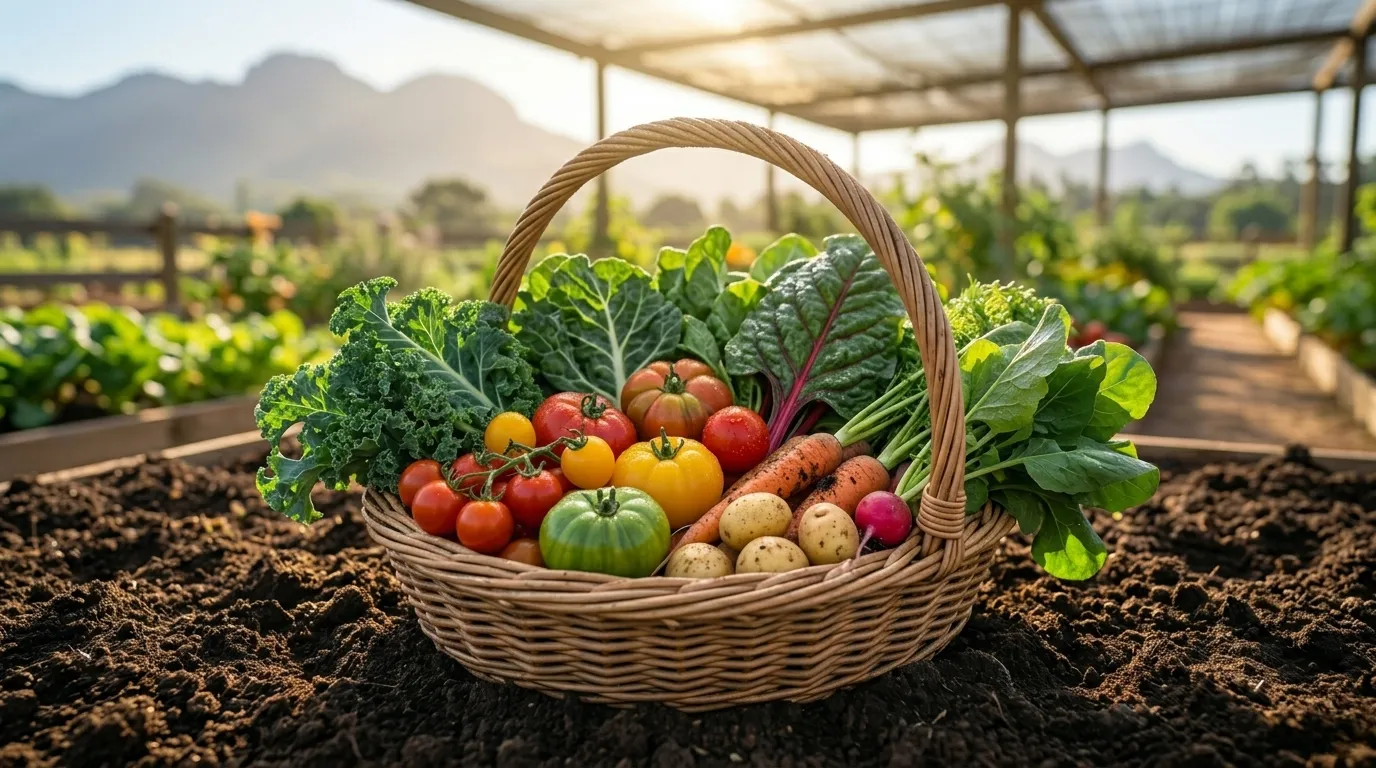
Farmland plots are generally categorized into small, medium, and large sizes, each designed for different needs.
Small Plots (Entry-Level Investment)
- Ideal for: First-time investors and budget-conscious buyers.
- Best suited for: long-term appreciation and low-risk investment.
- Advantages: Lower cost, high demand, and easy resale.
Medium Plots (Balanced Investment)
- Ideal for: Investors looking for both appreciation and income.
- Best suited for: Plantation farming and passive income.
- Advantages: Better returns with flexibility in farming options.
Large Plots (Lifestyle & Premium Investment)
- Ideal for: Farmhouse buyers and long-term investors.
- Best suited for: Lifestyle use, retreats, and large-scale farming.
- Advantages: Privacy, multiple income opportunities, and higher long-term value.
3. Consider Your Budget & Financial Planning
Your budget plays a key role in deciding the right plot size. Smaller plots offer a lower entry point, while larger plots require higher investment but provide greater flexibility and long-term value.
It is important to plan for long-term holding and ensure your investment aligns with your financial goals. Managed farmland reduces maintenance costs and simplifies financial planning by handling operations efficiently.
4. Evaluate Time Commitment & Management
Managed farmland allows investors to own land without daily involvement. However, your level of interest in farming activities may vary.
Small plots require minimal involvement, while medium plots allow partial participation. Large plots offer more customization and control, especially for lifestyle-focused buyers.
5. Location & Growth Potential
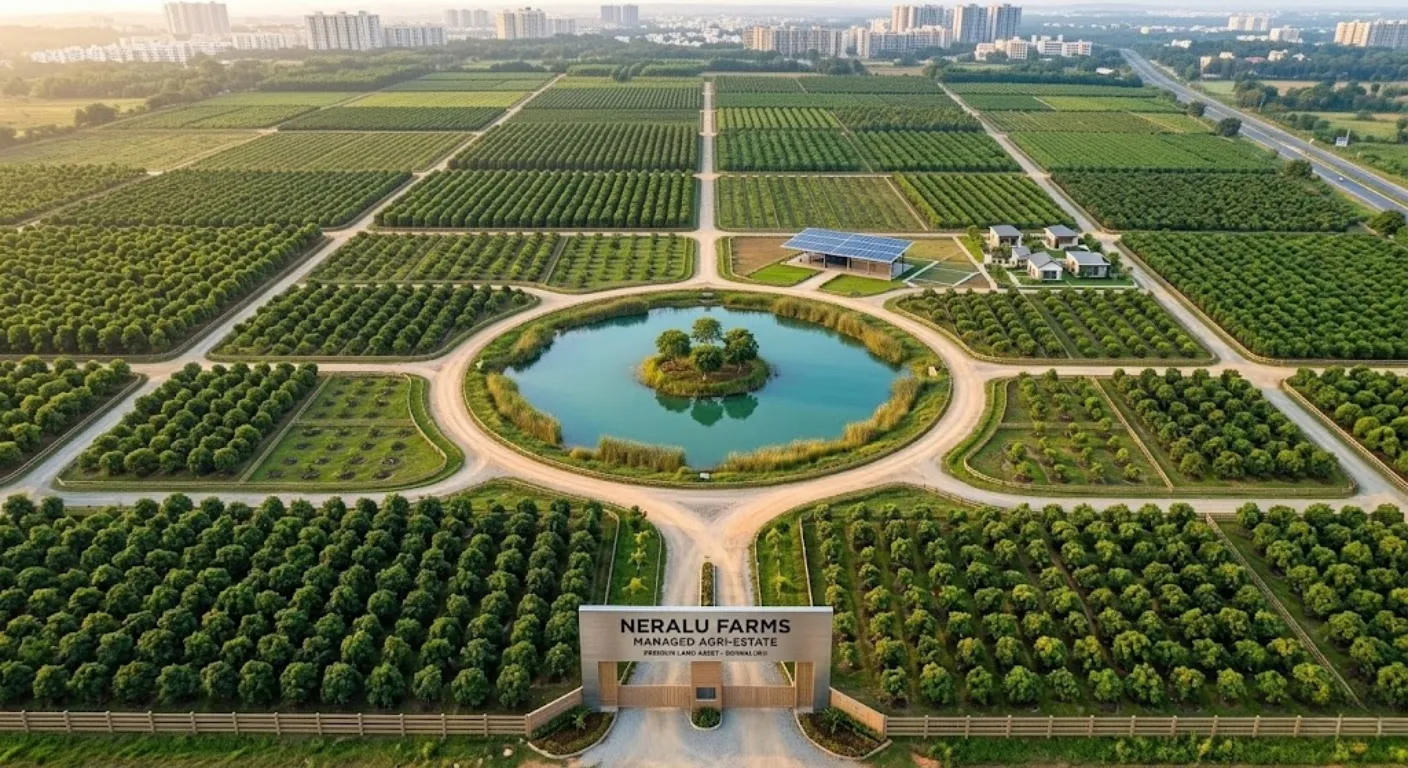
Location is as important as plot size. Farmland near growing regions and infrastructure hubs offers better appreciation potential.
A smaller plot in a high-growth area can outperform a larger plot in a low-demand location. Always consider connectivity, development plans, and future demand before investing.
6. Legal, Lifestyle & Exit Planning
Before finalizing your investment, consider legal clarity, resale potential, and future use. Smaller and medium plots are easier to sell, while larger plots are better suited for long-term ownership.
Your decision should align with your future plans, whether it is investment, retirement, or building a farmhouse.
Common Questions About Farmland Plot Size in India
1. What is the ideal farmland plot size for investment?
The ideal size depends on your goal. Small plots are good for appreciation, while medium and large plots are better for income and lifestyle use.
2. How much land is required for farming in India?
A minimum of quarter acre to one acre is typically suitable for basic farming and plantation activities.
3. Is a small farmland plot a good investment?
Yes, small plots offer low investment cost, high demand, and strong appreciation potential.
4. What is the best plot size for passive income?
Medium plots are ideal as they allow better plantation density and consistent agricultural income.
5. Can I build a farmhouse on any plot size?
Larger plots are more suitable for building farmhouses due to space requirements and privacy.
6. Does plot size affect farmland appreciation?
Yes, smaller plots often have higher resale demand, while larger plots provide long-term value.
7. What factors should I consider when choosing plot size?
Consider budget, investment goals, location, and future plans before selecting a plot.
Conclusion: Choose the Right Plot for Your Goals
Selecting the right farmland plot size is not about buying more land but choosing what fits your goals. Each plot size offers unique benefits, whether it is investment growth, passive income, or lifestyle value.
With proper planning, the right plot size can help you achieve both financial and personal goals while creating long-term value.