
Farmland vs Real Estate in India: A Data-Driven Comparison for Smart Investors
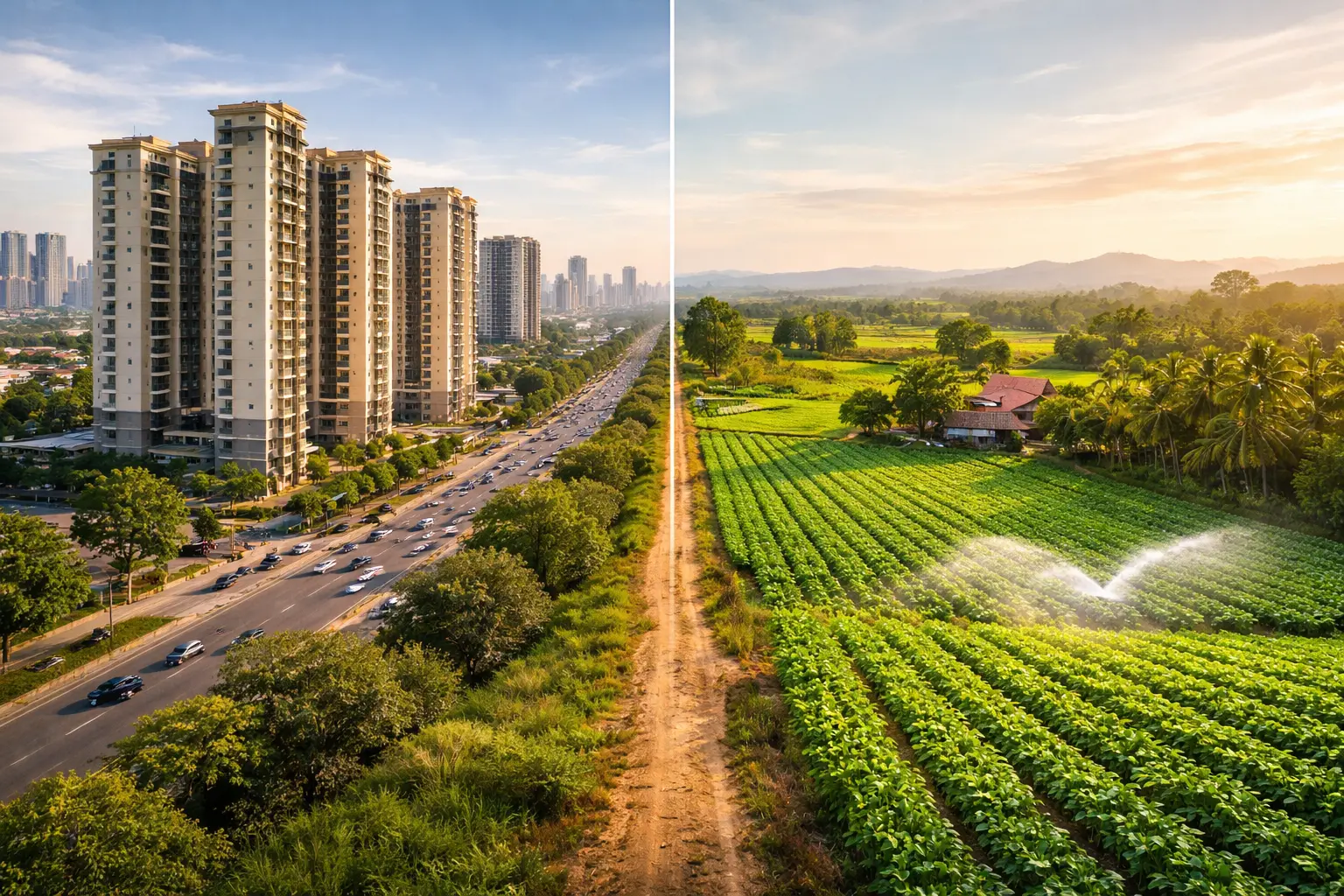
Farmland vs real estate in India is no longer just a basic comparison it reflects how different asset classes behave over time and how they fit into long-term wealth creation. Investors today are not just looking to buy property; they are trying to understand where real value lies over the next 10–15 years.
While real estate has traditionally been the go-to investment, farmland is slowly entering the conversation as a serious alternative. This shift is not driven by hype, but by changing market conditions, rising urban prices, and a growing awareness of land scarcity.
Understanding how these two assets differ in terms of growth, returns, and practicality is key to making a smarter investment decision.
Farmland vs Real Estate in India: Quick Comparison
Farmland vs real estate in India depends on investment goals. Farmland offers long-term appreciation and asset stability, while real estate provides rental income and easier liquidity, making both suitable for different investor needs.
How Farmland vs Real Estate is Evolving in India
For a long time, real estate dominated investment portfolios because it was easy to understand and widely accepted. Buying a flat or plot felt secure and familiar. However, over time, rising property prices and slower appreciation in some urban markets have made investors rethink their approach.
This is where farmland starts gaining attention. Unlike built property, land is finite. As cities expand and infrastructure improves, nearby farmland begins to attract interest, not immediately, but steadily over time. This gradual shift is changing how investors look at land—not just as a passive asset, but as something with long-term strategic value.
Investment Data: Farmland vs Real Estate in India
When you look at real estate data over the years, one thing becomes clear—it moves in cycles. There are periods of rapid growth followed by slowdowns. These cycles are influenced by interest rates, economic conditions, and market demand.
Farmland behaves differently. Its growth is usually slower but more consistent. Instead of reacting to short-term market conditions, it responds to long-term factors like infrastructure development, connectivity, and expansion of nearby towns and cities.
This makes farmland less volatile and more predictable over longer timeframes, especially for investors who are not looking for quick returns.
Growth Trends: Land vs Property Investment
Real estate growth is closely tied to urban demand. When cities grow rapidly, property prices rise, but once markets mature, growth often slows down. In many major cities, this effect is already visible.
Farmland growth, on the other hand, happens on the edges—literally. As cities expand outward, previously overlooked areas begin to gain importance. Over time, this creates a natural appreciation cycle that does not depend heavily on market timing.
This is why farmland is often seen as a “wait and watch” investment—it rewards patience rather than quick decisions.
Returns & ROI: Farmland vs Real Estate
From a returns perspective, farmland and real estate serve different purposes. Farmland is typically about long-term value creation. Its appreciation may not be immediate, but over time, it can be significant, especially in growth corridors.
- Land Appreciation: Driven by development and increasing demand
- Agricultural Income: Possible through farming or managed models
Real estate, in contrast, is often chosen for rental income and relatively predictable returns. However, rental yields in India are not very high, which means appreciation plays a bigger role there as well.
In simple terms, farmland builds wealth quietly over time, while real estate provides more visible, short-term cash flow.
Liquidity, Risk & Practical Factors
Liquidity is where real estate has a clear advantage. Selling a flat or apartment in a good location is usually faster compared to farmland, especially in less developed areas.
That said, farmland risks are more about execution than unpredictability. Choosing the right location, ensuring water availability, and proper land selection are key factors. Once these are handled, the investment tends to remain stable.
Real estate, however, can be affected by broader market conditions, which are not always in an investor’s control.
Legal & Accessibility Factors
Real estate is easier to access and understand. The process is standardized, and most investors are familiar with it.
Farmland requires a bit more awareness. Regulations can vary by state, and factors like land titles and ownership rules need careful verification. While this adds complexity, it also explains why farmland remains less saturated compared to real estate.
Investor Perspective: Choosing the Right Asset
Every investment decision ultimately comes down to intent. If the goal is steady income and relatively easier exit options, real estate fits well. If the goal is long-term appreciation and owning a tangible, limited asset, farmland becomes more attractive.
Many experienced investors do not treat this as an either-or decision. Instead, they use both—real estate for stability and farmland for long-term growth. This balanced approach helps manage risk while still capturing upside potential.
Future Outlook of Farmland vs Real Estate
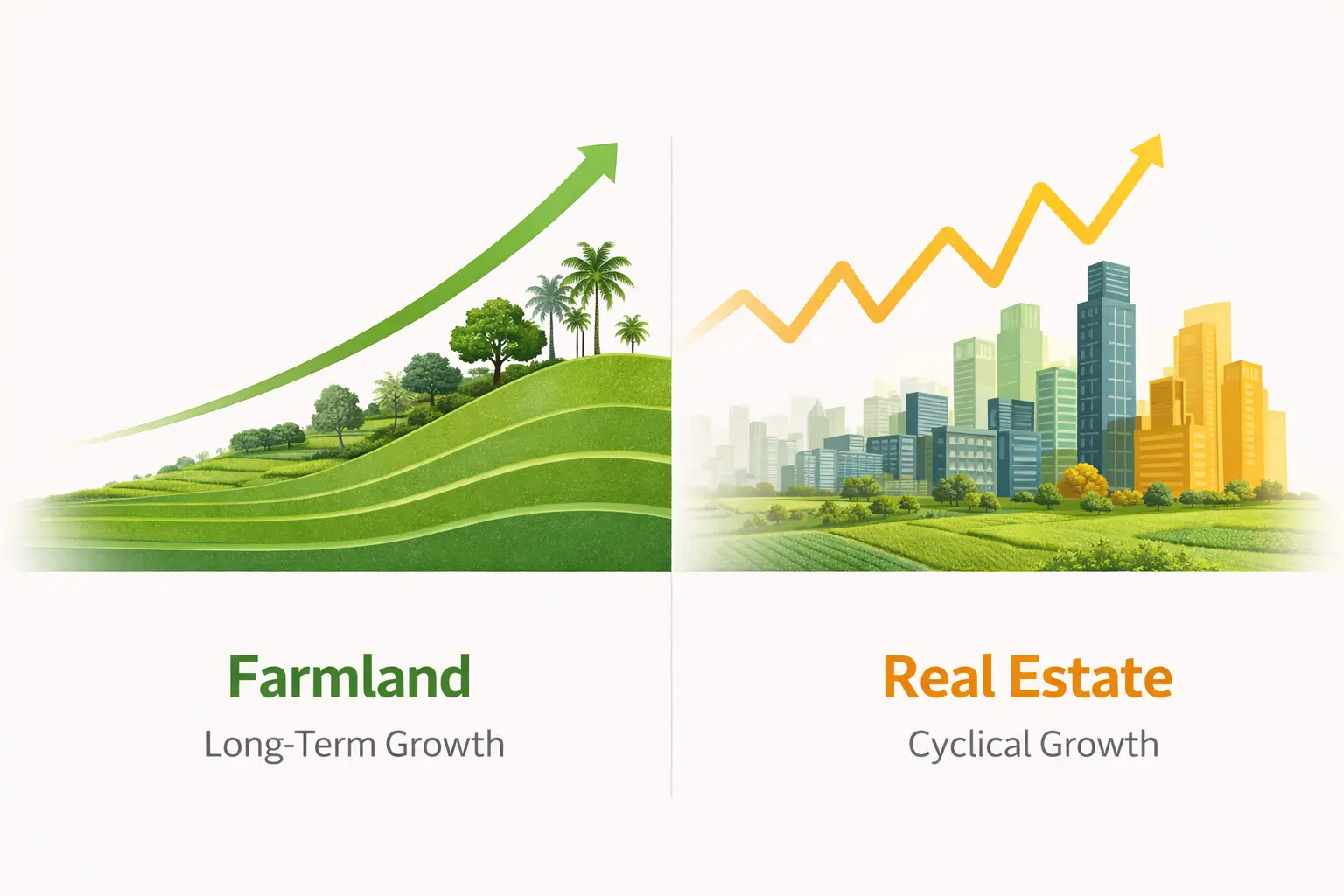
Looking ahead, both farmland and real estate will continue to play important roles. However, the dynamics are shifting. As urban land becomes expensive and scarce, attention naturally moves toward surrounding regions.
Farmland stands to benefit from this shift, especially in areas with improving infrastructure. At the same time, real estate will remain relevant due to continuous housing demand.
The key difference is that farmland is still in an early stage as an organized investment category, which gives it room to grow.
The Rise of Managed Farmland
One of the biggest changes in recent years is the emergence of managed farmland. Traditionally, owning farmland meant being directly involved in operations, which limited its appeal.
Managed models change this completely. With professional teams handling plantation, irrigation, and maintenance, investors can now participate without dealing with day-to-day complexities. This has made farmland far more accessible, especially for urban investors.
Farmland vs Real Estate in India: Key Questions Answered
1. Which is better: farmland or real estate investment in India?
The choice depends on your goals. Farmland investment in India is ideal for long-term appreciation, while real estate investment in India is better suited for stable income and liquidity.
2. Is farmland a good investment in India?
Yes, farmland investment in India is considered a strong option due to limited land supply, increasing demand, and its ability to deliver consistent long-term growth.
3. Does farmland give better returns than real estate?
Farmland returns in India can outperform over the long term due to land appreciation, while real estate returns are generally more predictable through rental income.
4. What are the risks of farmland investment in India?
The main risks of farmland investment include land quality, water availability, and legal verification. These risks can be minimized with proper due diligence.
5. Is real estate still a good investment in India?
Yes, real estate investment in India remains a reliable choice for rental income, asset stability, and long-term portfolio diversification.
6. Why is farmland gaining popularity among investors?
Farmland investment is gaining popularity due to its long-term value, scarcity of land, and increasing interest in alternative assets beyond traditional real estate.
7. What is the future of farmland vs real estate in India?
The future of farmland investment in India looks strong due to growing demand and limited supply, while real estate will continue to grow with urban development and housing needs.
Conclusion
Farmland vs real estate in India is not about which is universally better, but about what fits your investment mindset. Farmland rewards patience and long-term thinking, while real estate offers familiarity and steady returns.
For investors willing to look beyond traditional options, farmland presents an opportunity that is still evolving and gradually gaining recognition.