
Why Managed Farmland Beats a Vacant Plot Every Time
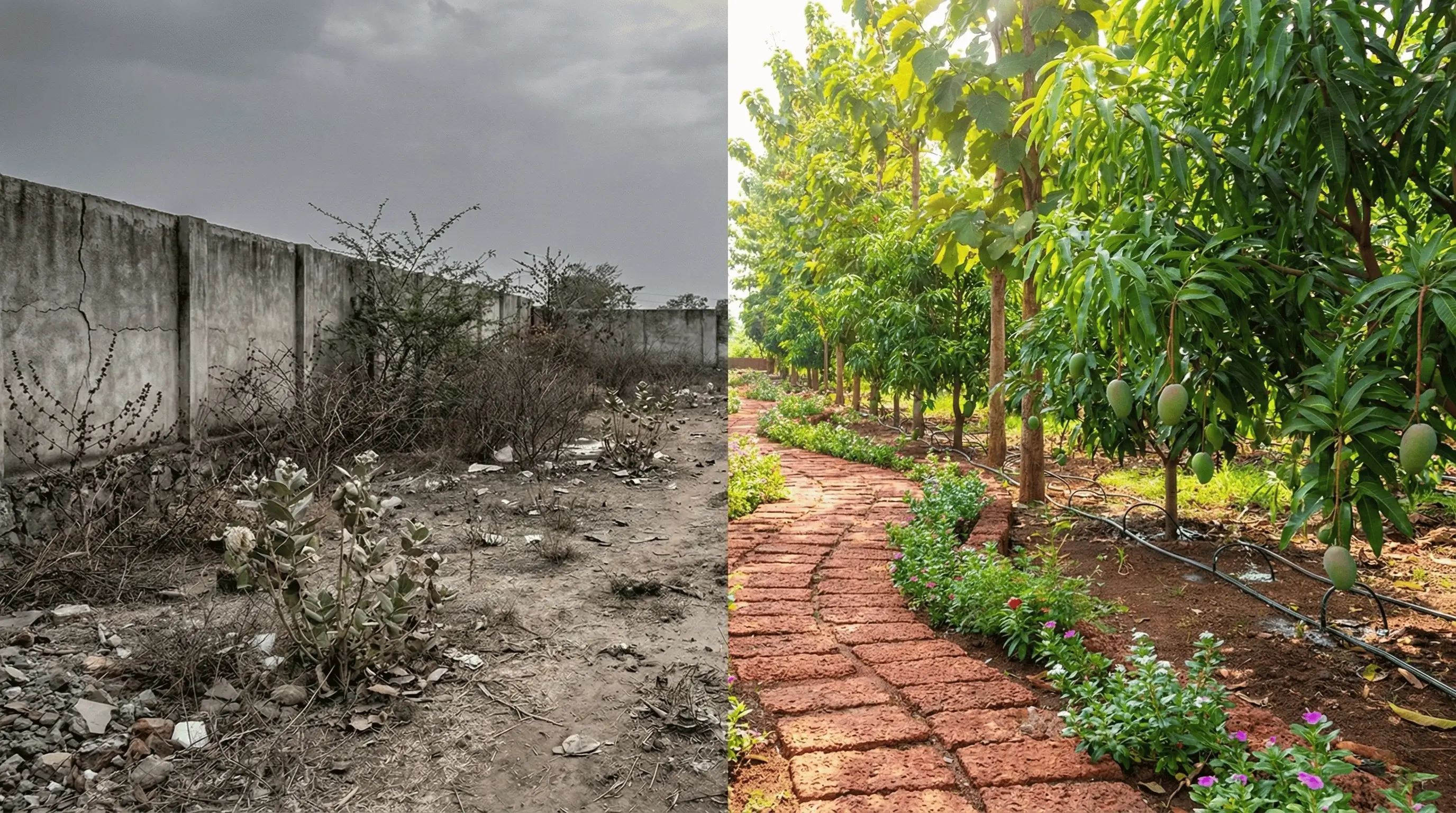
Managed farmland vs vacant land investment is one of the most important decisions for modern investors in India. Traditionally, many investors preferred buying vacant plots and waiting for long-term appreciation. However, this approach often results in zero income, high risk, and uncertain returns. Today, managed farmland investment offers a smarter alternative by combining land appreciation with passive income generation.
In regions like North Bangalore, farmland investment is gaining popularity due to strong infrastructure growth and increasing demand for sustainable assets. Unlike vacant land, managed farmland is actively cultivated, making it a productive and income-generating investment from day one.
Why Vacant Land Investment Has Limitations
Vacant land investment depends entirely on price appreciation. Investors typically buy land and wait for years, hoping that urban expansion will increase its value. During this period, the land generates no income and remains a non-performing asset.
In addition, vacant land comes with several risks such as encroachment, legal issues, and maintenance challenges. Without proper monitoring, land can be misused or illegally occupied, leading to long legal disputes. This makes vacant land a high-risk investment for absentee owners.
Another limitation is the lack of liquidity and predictability. Market conditions, infrastructure development, and government policies directly impact land value, making returns uncertain.
Managed Farmland: A Smarter Investment Approach
Managed farmland investment addresses these challenges by converting land into a productive asset. Instead of leaving land idle, it is actively used for agriculture and plantation, generating consistent returns over time.
Professional management ensures that farming activities such as planting, irrigation, and maintenance are handled efficiently. This allows investors to benefit from agricultural income without being involved in day-to-day operations.
In addition to income generation, managed farmland also benefits from land appreciation. This dual return model makes it a more balanced and reliable investment compared to vacant land.
Security and Risk Management
One of the biggest concerns in land investment is security. Vacant plots are often left unattended, increasing the risk of encroachment and disputes. Recovering such land can be time-consuming and costly.

Managed farmland eliminates this risk by ensuring continuous monitoring and protection. With proper fencing, surveillance systems, and on-ground management, the land remains secure. Active cultivation also ensures that the property is regularly maintained and supervised.
ROI Comparison: Farmland vs Vacant Land
The key difference between managed farmland and vacant land lies in return on investment. Vacant land generates returns only through appreciation, which may take several years. During this time, investors receive no income.
Managed farmland, on the other hand, provides dual benefits. Investors gain from both land appreciation and agricultural income. Crops, plantations, and timber investments contribute to regular earnings, making the asset more productive.
This combination of income and appreciation improves overall ROI and reduces financial risk, making farmland investment a more efficient wealth-building strategy.
Red Sandalwood and High-Value Crop Investment
One of the major advantages of managed farmland is the ability to grow high-value crops such as red sandalwood. These crops have strong global demand and offer significant long-term returns.
Red sandalwood plantations typically mature over 12–15 years and generate high-value timber. With proper management, investors can benefit from substantial returns while the land continues to appreciate.

This makes farmland investment not just a real estate asset, but a long-term income-generating opportunity.
Tax Benefits of Farmland Investment
Another major advantage of farmland investment is tax efficiency. Agricultural income in India is generally exempt from income tax under Section 10(1) of the Income Tax Act. This allows investors to retain a larger portion of their earnings.
In contrast, profits from selling vacant land are subject to capital gains tax, reducing overall returns. This makes farmland a more tax-efficient investment option for long-term wealth creation.
Passive Income and Zero Maintenance
Managed farmland offers a hassle-free investment experience. Professional teams handle all farming operations, including plantation, irrigation, and maintenance. Investors do not need to manage the land themselves.
This makes farmland investment suitable for urban professionals who want to generate passive income without operational involvement. Compared to vacant land, which requires monitoring and maintenance, managed farmland provides a completely hands-off experience.
Why North Bangalore is Ideal for Farmland Investment
North Bangalore has emerged as a prime investment destination due to rapid infrastructure development and connectivity improvements. Proximity to the airport and upcoming projects has increased demand for land in this region.
The area also offers favorable soil and climate conditions for agriculture, making it ideal for managed farmland projects. This combination of growth and productivity makes North Bangalore a strategic choice for investors.
Common Questions About Farmland vs Vacant Land Investment
1. Is managed farmland better than vacant land?
Yes, managed farmland generates passive income and better ROI, while vacant land depends only on appreciation.
2. Does farmland give better returns than plots?
Farmland offers both land appreciation and agricultural income, making it more profitable.
3. Is vacant land a good investment in India?
Vacant land can appreciate but does not generate income and carries risks like encroachment.
4. What are the risks of vacant land investment?
Risks include encroachment, legal disputes, and zero income generation.
5. How does managed farmland generate income?
Income comes from crops, plantations, and long-term timber value.
6. Is farmland investment safe in India?
Yes, managed farmland offers security, legal compliance, and professional management.
7. Which has better ROI farmland or plots?
Farmland provides higher ROI due to multiple income streams and appreciation.
Conclusion
When comparing managed farmland vs vacant land, the difference is clear. Vacant land is a passive asset that depends solely on future appreciation, while managed farmland is an active investment that generates income and long-term growth.
With benefits such as passive income, better ROI, tax advantages, and professional management, farmland investment offers a more secure and efficient way to build wealth. For investors looking for a balanced and future-ready asset, managed farmland is the smarter choice.